Please note that extended transit times are to be expected for deliveries due to the ongoing situation in the region.
OUR PRIDE. OUR UAE 🇦🇪 إمارتنا. فخرنا
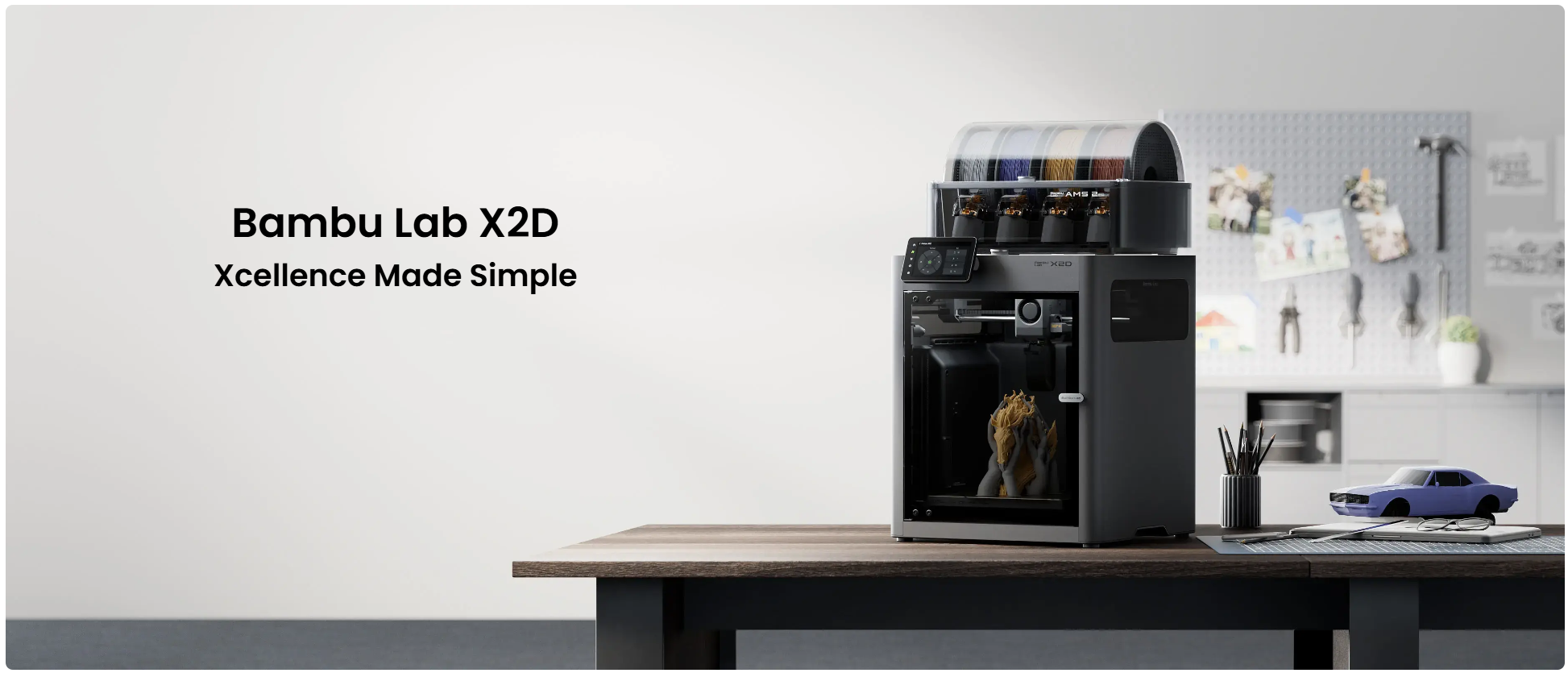
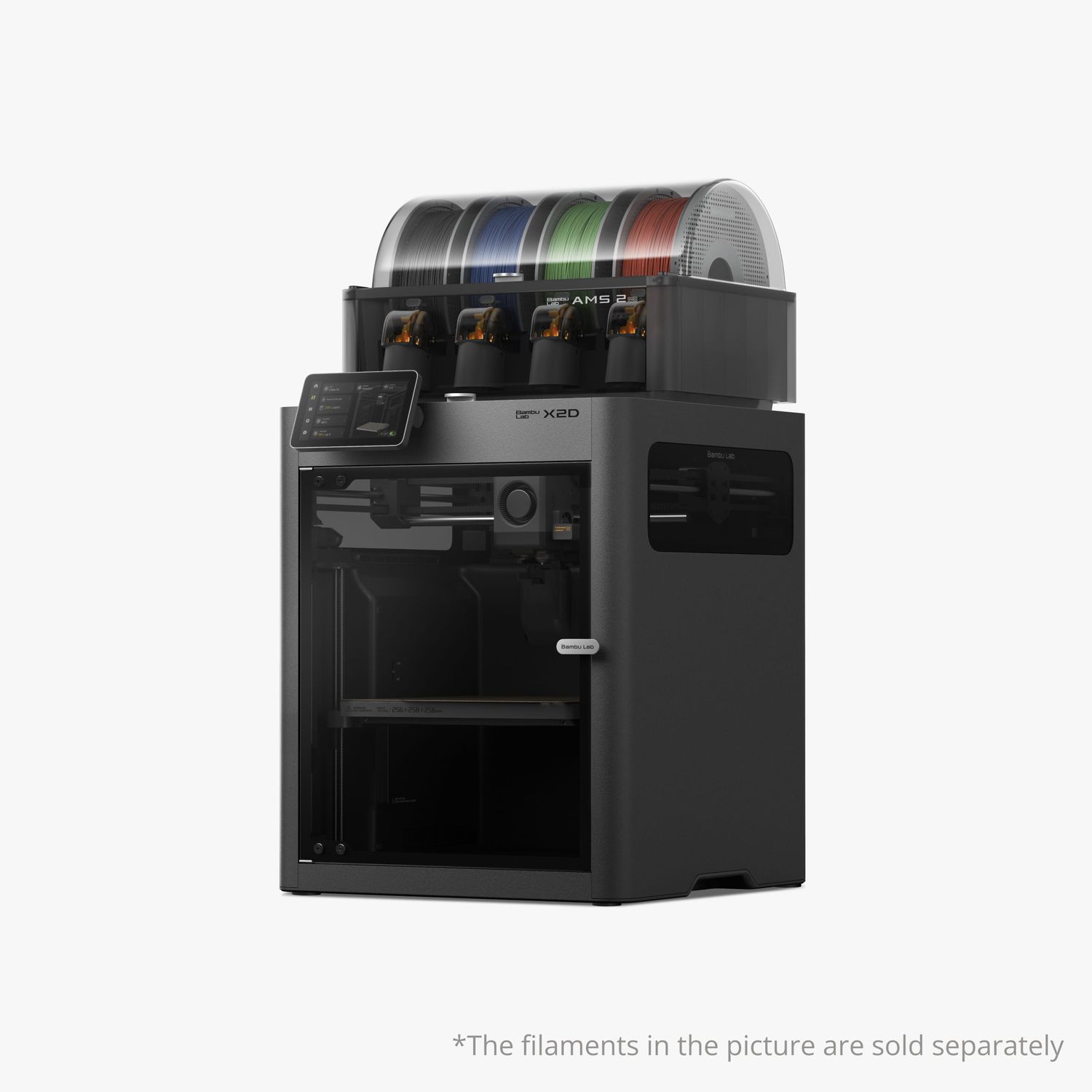
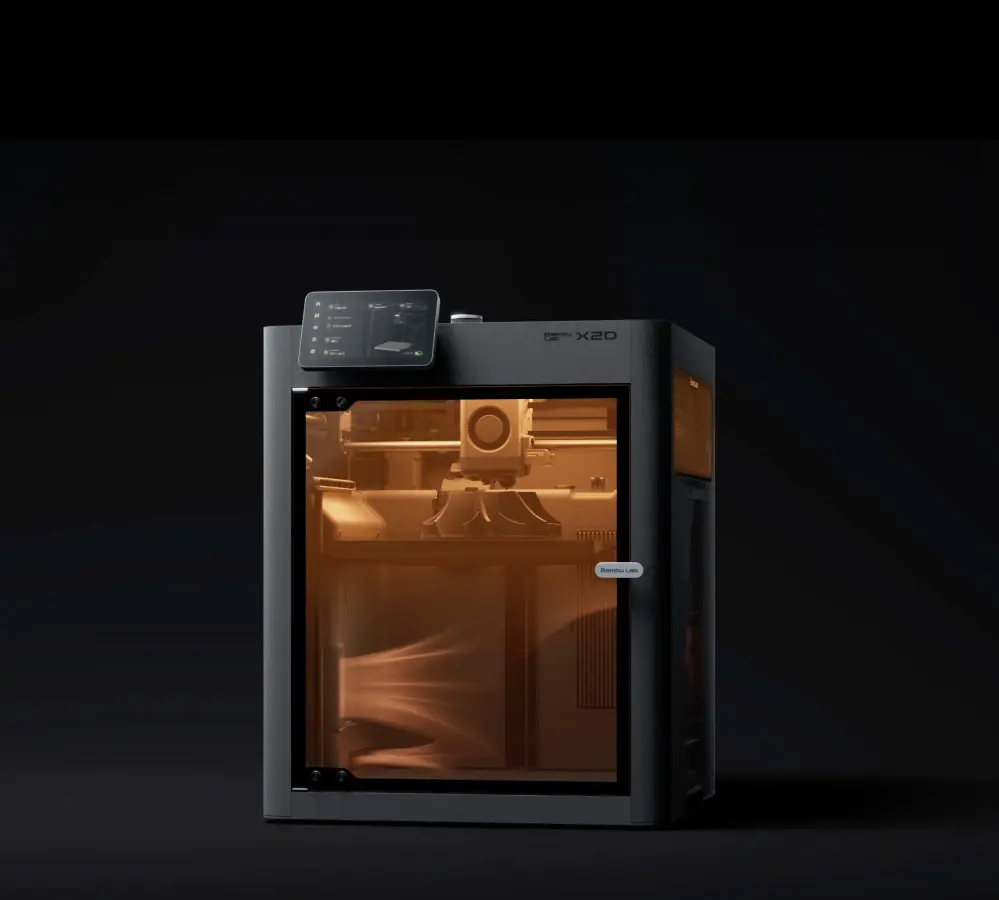
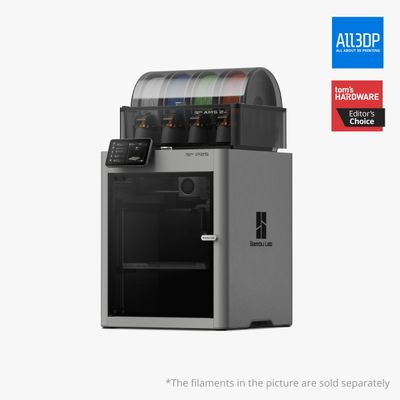
The New Bambu Lab X2D is a next-generation, dual-nozzle 3D printer featuring active 65°C chamber heating, 300°C nozzles, and AI-driven monitoring for advanced, multi-material printing with dedicated support. It is designed for high-performance materials (ASA, PC, Nylon), includes integrated filtration, and supports the AMS2 Pro system for 4-spool, 65°C drying storage.
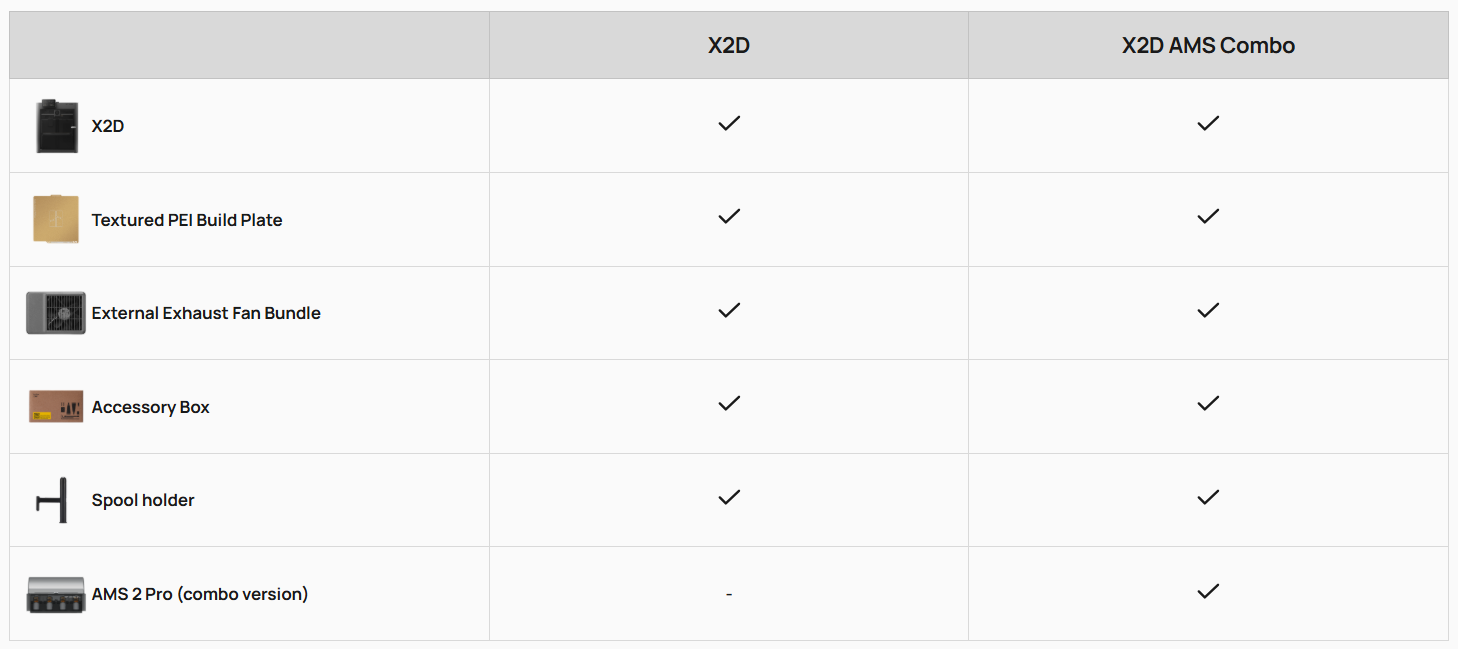
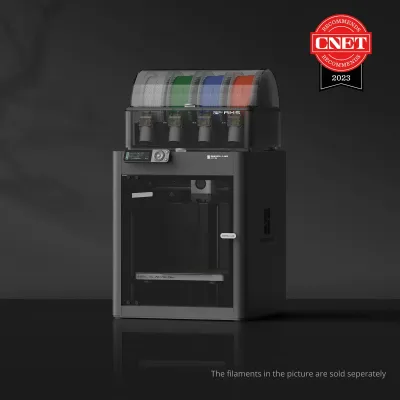
The Bambu Lab X2D Combo is a next-generation 3D printer designed to make multi-material printing more accessible and reliable. This Combo version includes the AMS 2 Pro (Automatic Material System), enabling automatic material handling and seamless multi-color or multi-material printing. With a dual-nozzle setup, heated chamber, and advanced monitoring system, it delivers consistent results across a wide range of materials. Built for both everyday use and more demanding applications, the X2D offers a practical balance of performance, precision, and ease of use.
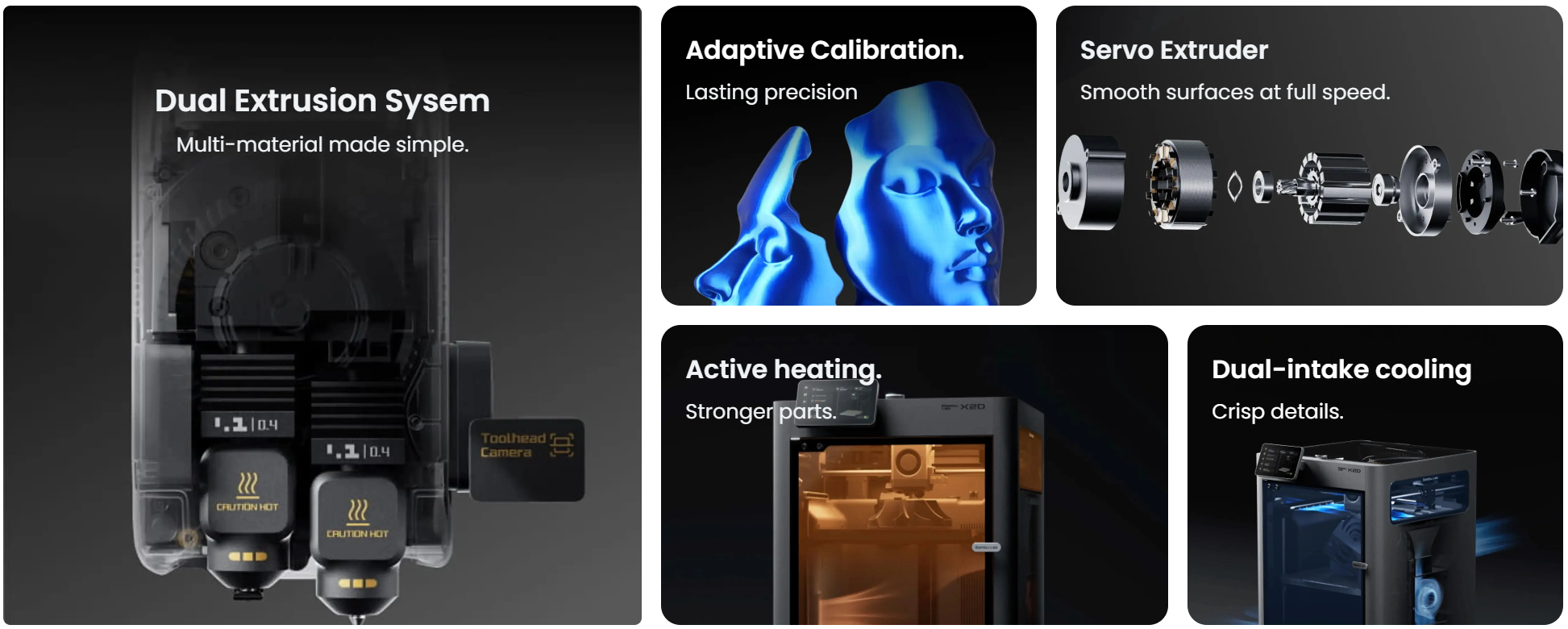
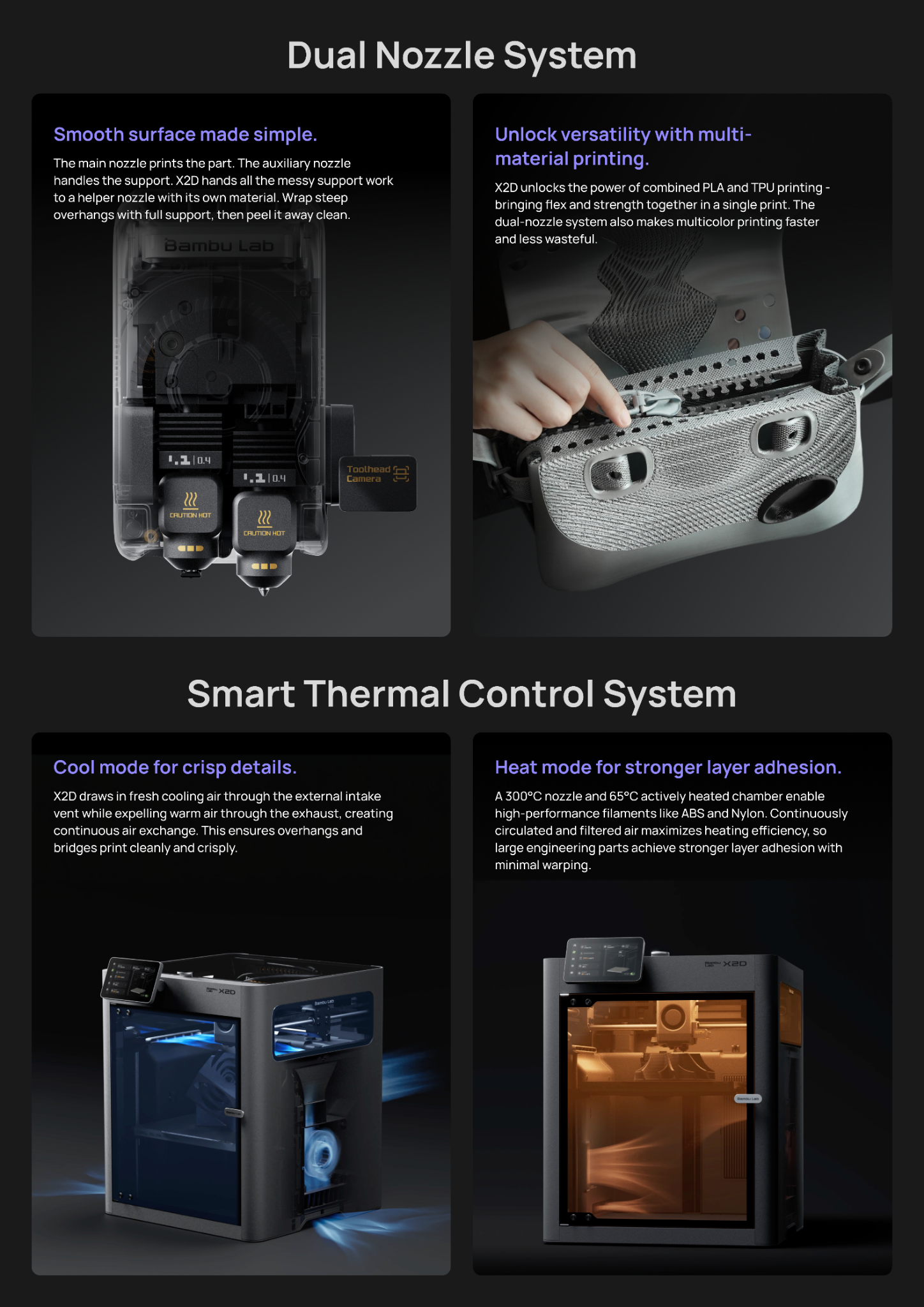
The main nozzle prints the part. The auxiliary nozzle handles the support¹. X2D hands all the messy support work to a helper nozzle with its own material. Wrap steep overhangs, fabric folds, and internal channels with full support, then peel it away clean.
The X2D utilizes a unique gear and ratchet mechanical switching mechanism for its dual nozzles. By eliminating the need for an additional motor on the print head itself, mass and vibration are minimized at high speeds. The switching mechanism has passed durability testing with over one million cycles without loss of performance. The system is optimized for running model and support materials in parallel, enabling the creation of intricate shapes with high precision.
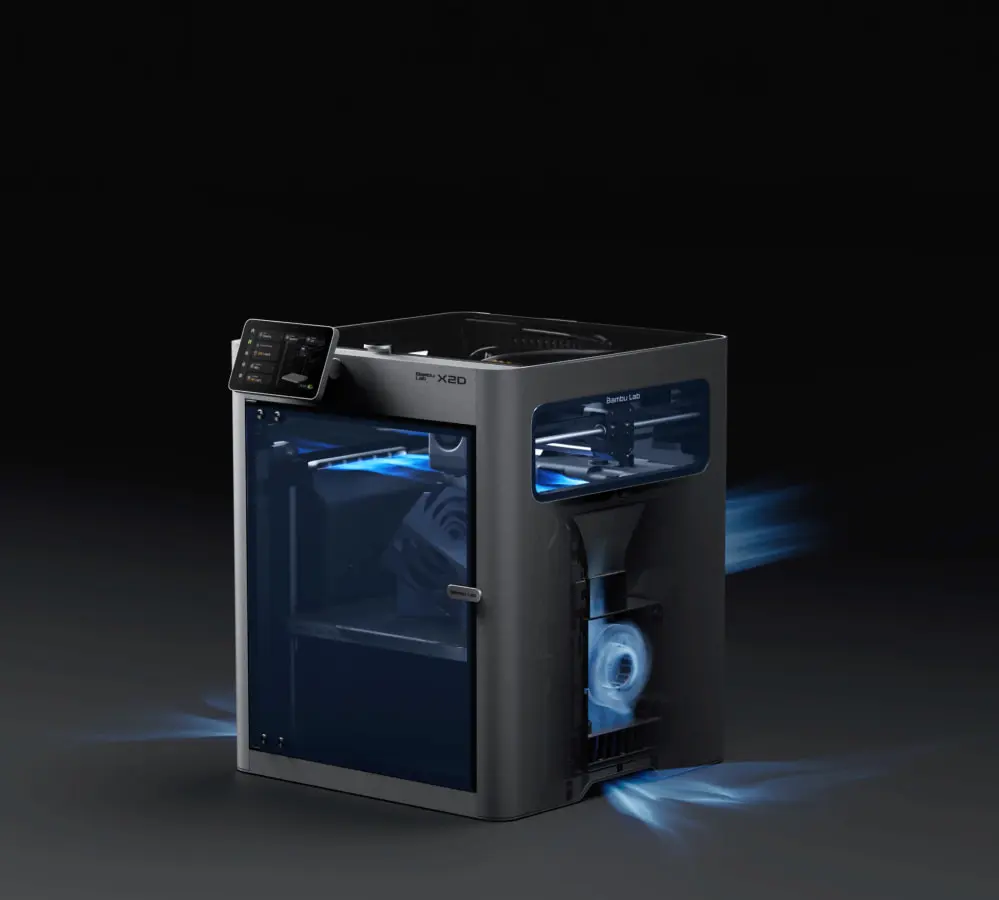
The printer is equipped with 31 sensors monitoring material flow, safety, and the thermal environment. The enclosed build chamber can be heated up to 65 °C, which combined with a 300 °C nozzle, enables printing in engineering materials such as ABS, ASA, and Nylon. Thanks to the PMSM motor, which samples torque 20,000 times per second, the machine can detect nozzle clogs before a print failure occurs.
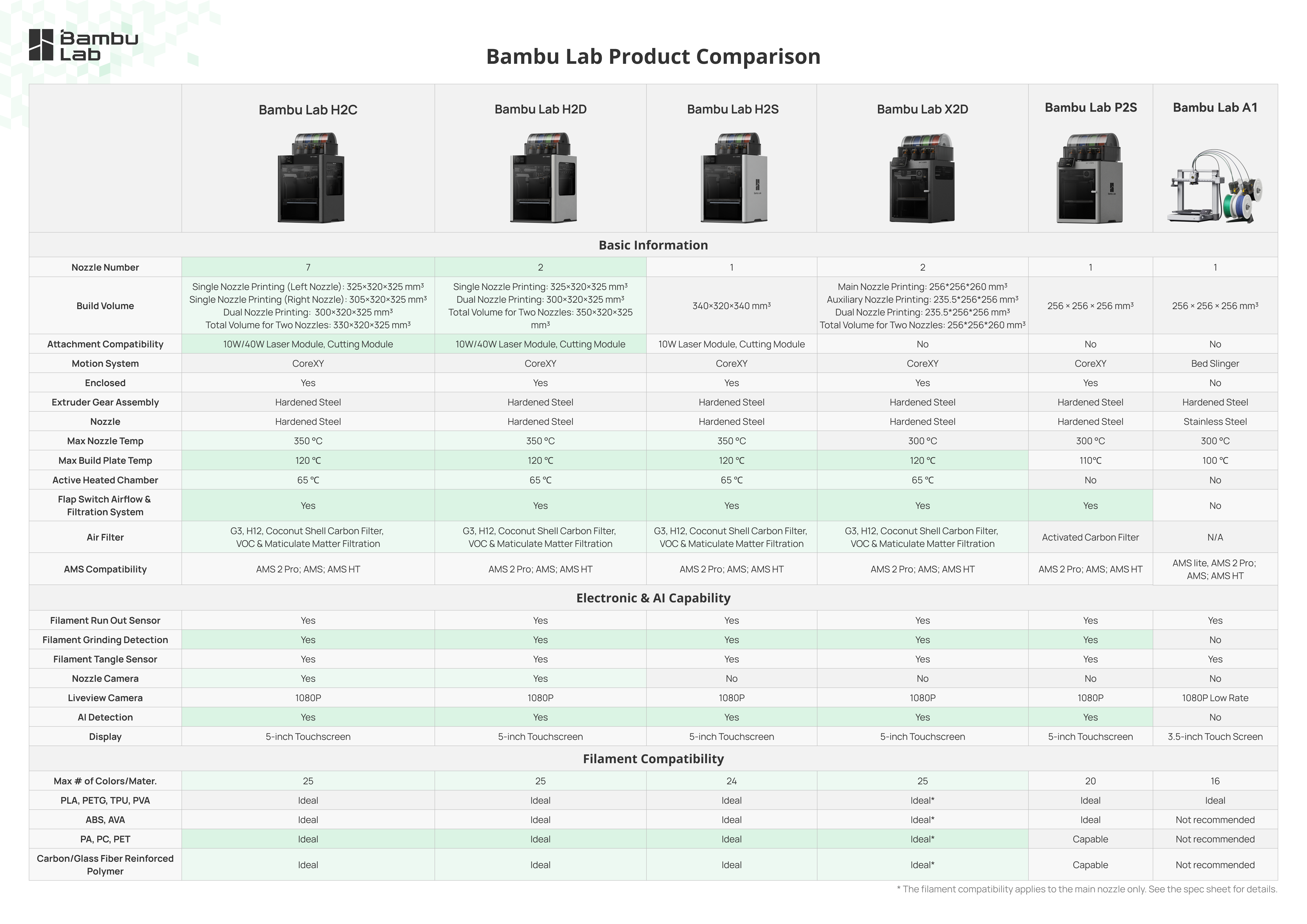
The build volume is 256 × 256 × 260 mm when using the primary nozzle, and 235.5 × 256 × 256 mm when both nozzles are active. This provides flexibility for both prototypes and functional components.
X2D is equipped with multiple sensors that monitor temperature, material flow, and system status throughout the entire print process. This contributes to stable operation and reduces the risk of failed prints, especially during longer jobs.For applications requiring higher precision, the system can be upgraded with a Vision Encoder for improved motion accuracy.
The printer is designed to operate in both workspace and office environments. Its footprint is comparable to previous Bambu Lab models, making it easy to integrate into existing setups.
An integrated triple-stage filtration system reduces particles and emissions during operation, and in silent mode, the noise level stays below 50 dB.
The system is primarily optimized for the combination of model material and dedicated support material. This simplifies support removal and results in a more predictable final outcome.
It is possible to use two similar materials, but the system performs most efficiently when the materials serve clearly defined roles.
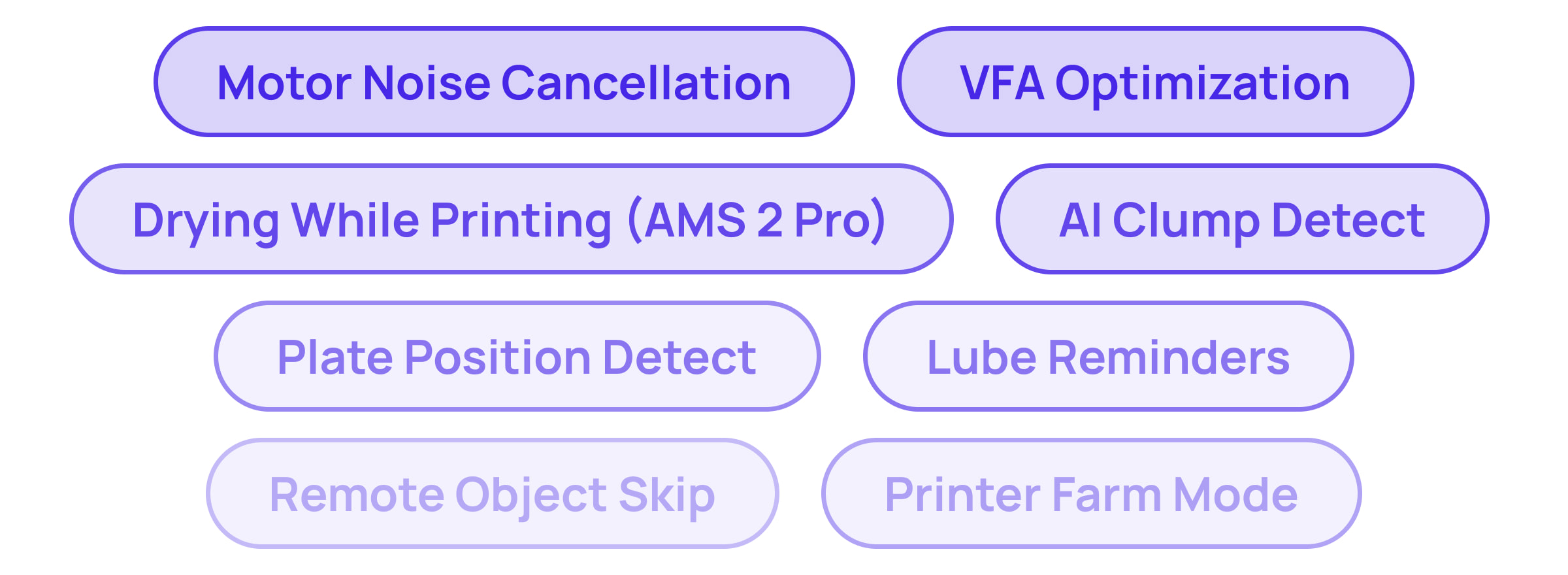
Ringing and ghosting blur edges at high speed. Active Vibration Compensation cancels them in real time - so edges print crisp, no matter how fast.
X2D prints beautifully the day it arrives. And it gets better with every update. Major firmware updates land roughly every three months⁸ - new features, better performance, all pushed straight to your machine.
|
Item
|
Specifications | |
| Printing Technology |
Fused Deposition Modeling
|
|
| Body | Build Volume (W*D*H) |
Main Nozzle Printing: 256*256*260 mm³
Auxiliary Nozzle Printing: 235.5*256*256 mm³
Dual Nozzle Printing: 235.5*256*256 mm³
Total Volume for Two Nozzles: 256*256*260 mm³
|
| Chassis |
Plastic and Steel
|
|
|
Outer Frame
|
Plastic, Glass, and Metal
|
|
| Dimensions and Weight | Physical Dimensions |
392*406*478 mm³
|
| Net Weight |
16.25 kg
|
|
| Toolhead | Main Extruder Gear | Hardened Steel |
| Main Extruder Motor |
Bambu Lab High-precision Permanent Magnet Synchronous Motor
|
|
|
Auxiliary Extruder Gear
|
Hardened Steel
|
|
|
Auxiliary Extruder Motor
|
Stepper Motor
|
|
| Nozzle | Hardened Steel | |
| Max Nozzle Temperature | 300 °C | |
| Included Nozzle Diameter | 0.4 mm | |
|
Supported Nozzle Diameter
|
0.2 mm, 0.4 mm, 0.6 mm, 0.8 mm
|
|
| Filament Cutter | Built-in | |
| Filament Diameter | 1.75 mm | |
| Heatbed | Supported Build Plate Type |
Textured PEI Plate, Smooth PEI Plate, Cool Plate SuperTack, Engineering Plate
|
| Max Heatbed Temperature | 120 ℃ | |
| Speed | Max Speed of Toolhead | 1000 mm/s |
| Max Acceleration of Toolhead | 20,000 mm/s² | |
|
Max Flow for Hotend
(Standard Flow Hotend)
|
40 mm³/s
(Test parameters: 250 mm round model with a single outer wall; Bambu Lab ABS; 280 °C printing temperature)
|
|
|
Max Flow for Hotend
(Optional High Flow Hotend)
|
65 mm³/s
(Test parameters: 250 mm round model with a single outer wall; Bambu Lab ABS; 280 °C printing temperature)
|
|
|
Chamber Temperature Control
|
Active Chamber Heating
|
Supported
|
|
Max Temperature
|
65 °C
|
|
|
Air Purification
|
Pre-filter Grade
|
G3 |
|
HEPA Filter Grade
|
H12
|
|
|
Activated Carbon Filter Type
|
Granulated Coconut Shell
|
|
|
VOC Filtration
|
Supported
|
|
|
Particulate Matter Filtration
|
Supported
|
|
|
Cooling
|
Part Cooling Fan
|
Closed Loop Control
|
|
Cooling Fan for Hotend
|
Closed Loop Control
|
|
|
Main Control Board Fan
|
Closed Loop Control
|
|
|
Chamber Exhaust Fan
|
Closed Loop Control
|
|
|
Chamber Heat Circulation Fan
|
Closed Loop Control
|
|
|
Auxiliary Part Cooling Fan
|
Closed Loop Control
|
|
|
Filament Supported
|
Main Hotend
|
PLA, PETG, ABS, ASA, TPU, Support for PLA, Support for PLA/PETG, Support for ABS, Support for PA/PET, PET, PA, PC, PVA; Carbon/Glass Fiber Reinforced PLA, PETG, ABS, ASA, PA6, PAHT, PPA, PET
|
|
Auxiliary Hotend
|
PLA (excluding PLA Aero), PETG, ABS, ASA, TPU for AMS, Support for PLA, Support for PLA/PETG, Support for ABS, Support for PA/PET, PET, PA, PC, PVA; Carbon/Glass Fiber Reinforced PLA, PETG, ABS, ASA, PA6, PAHT, PET
|
|
|
Auxiliary Hotend (print with caution¹)
|
PLA Silk, PETG-CF, ASA-CF, PA6-CF, TPU for AMS, Support for PA/PET
|
|
| Sensor |
Live View Camera
|
Built-in; 1920*1080
|
|
Toolhead Camera
|
Built-in; 1600*1200
|
|
| Door Sensor | Supported | |
| Filament Run Out Sensor | Supported | |
| Filament Tangle Sensor | Supported | |
| Filament Odometry | Supported with AMS | |
| Power Loss Recovery | Supported | |
|
Electrical Requirements²
|
Voltage |
100-120 VAC , 50/60 Hz
|
|
Max Power³
|
1100 W@110 V
|
|
|
Steady-State Power
|
PLA (25 °C): 250 W@110 V
PC (25 °C): 550 W@110 V
Please purchase the version corresponding to your region's voltage. Using the Printer in different regions, you may need to purchase a power adapter accordingly.
|
|
|
Environment Requirements
|
Working Temperature
|
10 °C-30 °C
|
| Electronics | Touchscreen |
5-inch 1280*720 Touchscreen
|
| Storage |
Built-in 8 GB EMMC and USB Port
|
|
| Control Interface | Touchscreen, mobile App, PC App | |
|
Motion Controller
|
Dual-core Cortex-M4 and Single-core Cortex-M7
|
|
|
Application Processor
|
Quad-core ARM with dedicated NPU
|
|
| Software | Slicer |
Bambu Studio
Supports third-party slicers which export standard G-code, such as Super Slicer, PrusaSlicer and Cura, but certain advanced features may not be supported.
|
| Supported Operating System |
MacOS, Windows, Linux
|
|
|
Network Control
|
Ethernet
|
Not Available
|
|
Wireless Network
|
Dual-Band Wi-Fi
|
|
|
Network Kill Switch
|
Not Available
|
|
|
Removable Network Module
|
Not Available
|
|
|
802.1X Network Access Control
|
Not Available
|
|
| Wi-Fi | Operating Frequency |
2412 - 2472 MHz, 5150 - 5850 MHz (FCC/CE)
2400 - 2483.5 MHz, 5150 - 5850 MHz (SRRC)
|
| Wi-Fi Transmitter Power (EIRP) |
2.4 GHz: <23 dBm (FCC); <20 dBm (CE/SRRC/MIC)
5 GHz Band1/2: <23 dBm (FCC/CE/SRRC/MIC)
5 GHz Band3: <30 dBm (CE); <24 dBm (FCC)
5 GHz Band4: <23 dBm (FCC/SRRC); <14 dBm (CE)
|
|
| Wi-Fi Protocol | IEEE 802.11 a/b/g/n | |
1)For optimal print quality, please use the main hotend to print these filaments. 2)The printer’s voltage specifications vary by sales region. Before use, please check the label next to the power socket on the printer to ensure the supplied voltage matches the indicated voltage. 3) To ensure the heatbed quickly reaches the needed temperature, the printer will maintain maximum power for about 3-5 minutes.
Please note that extended transit times are to be expected for deliveries due to the ongoing situation in the region.
OUR PRIDE. OUR UAE 🇦🇪 إمارتنا. فخرنا