Please note that extended transit times are to be expected for deliveries due to the ongoing situation in the region.
OUR PRIDE. OUR UAE 🇦🇪 إمارتنا. فخرنا
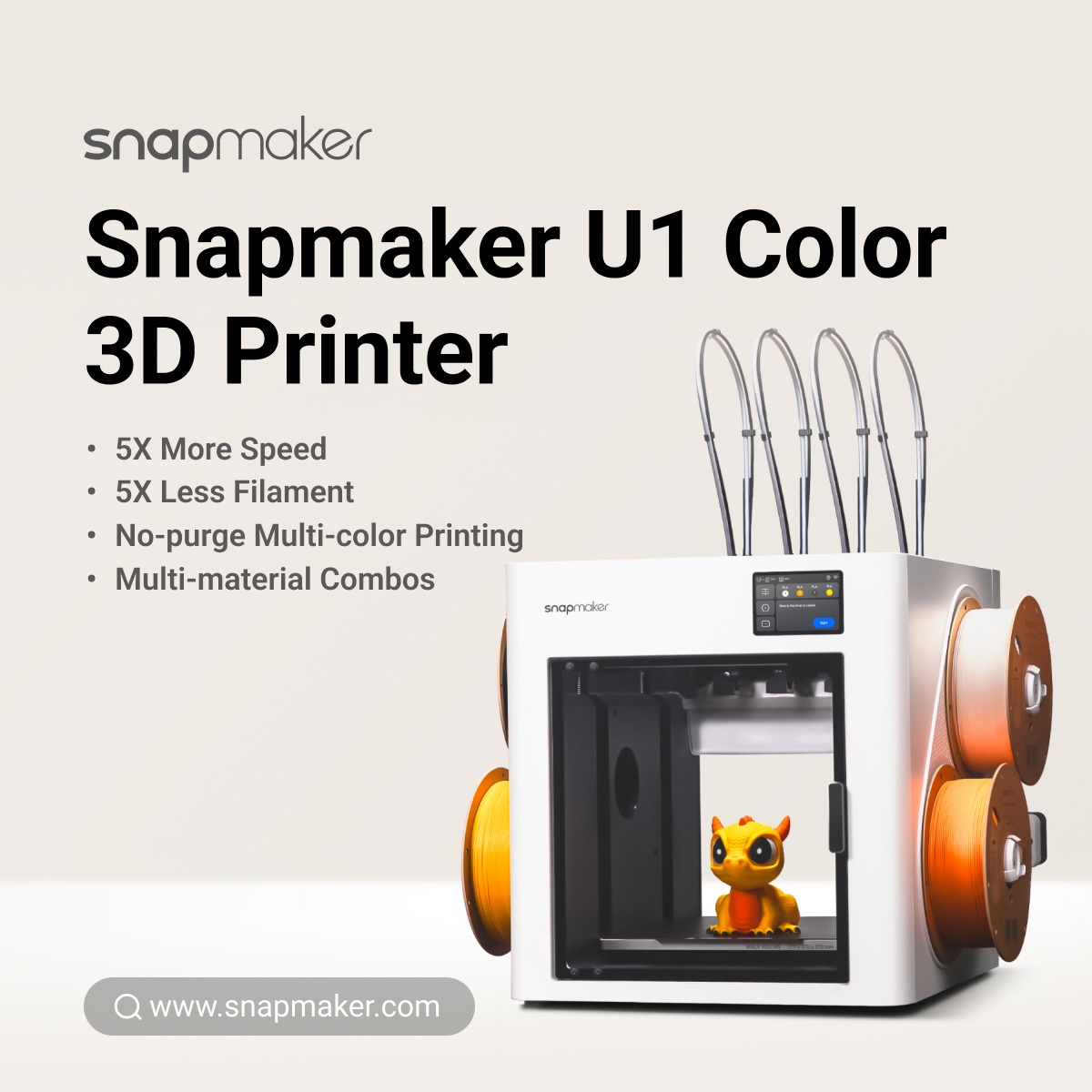
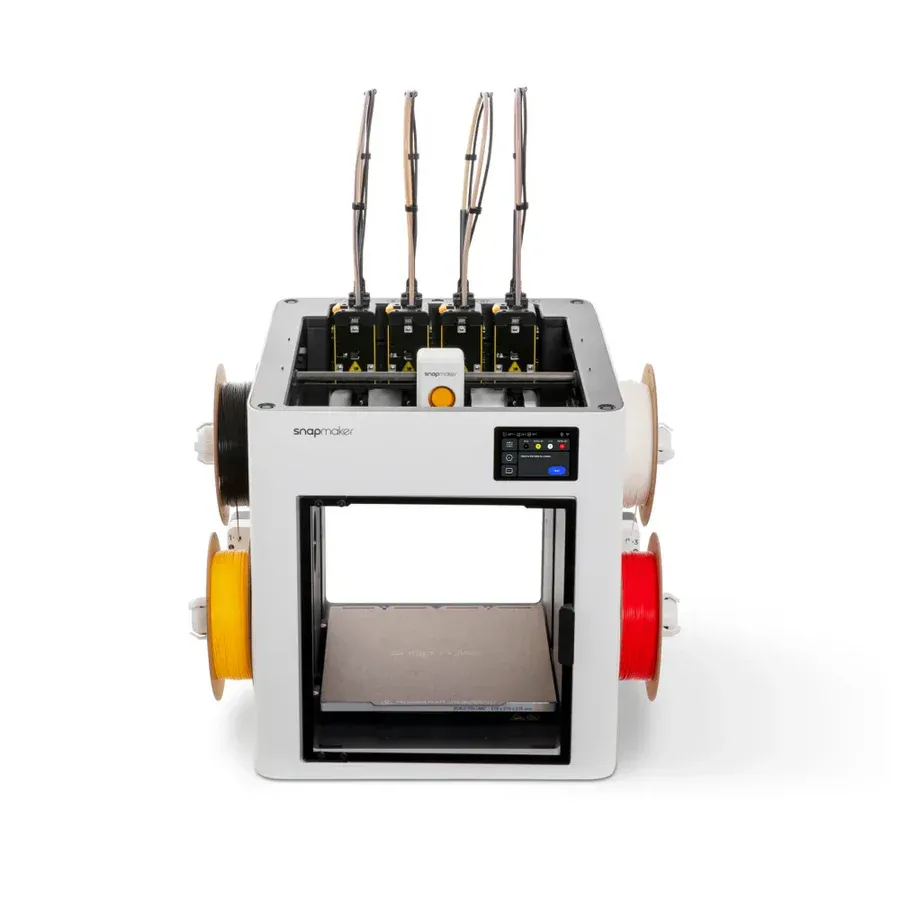
Snapmaker U1 Multicolor Multi Toolchnager 3D Printer Overview
• SnapSwap™ System: With 4 toolheads preloaded and pre-heated materials, U1 cuts waiting time to 5 seconds by swapping toolheads, and eliminates remaining material squeezing out for filament changes, enabling 5X more speed and 5X less waste.
• Multiple Colors and Materials: 4 individual extruders enable printing creations with multi-color, multi-material filaments, unleashing your creativity.
• Smart Calibration: Dynamic flow calibration, vibration compensation, fine-tuned extrusion, and flawless first layer.
• CoreXY System with 500mm/s Speed: Lightweight, rigid carbon fiber X-axis rails, delivering travel speeds of up to 500mm/s, and maintaining long-term precision across a 270 × 270 × 270mm work area.
• Ease of Use: Automatic filament system, AI-powered print monitoring and smart control, such as 3.5-inch touchscreen, App remote control, and software Snapmaker Orca.
Note: The AI-related function will be added by December 2025 through an OTA firmware update.
Meet Snapmaker U1
Make More, Waste Less
Creative Vibes, Uplifted by U1
Whether you're bonding over colorful creations at home, building your ultimate hobby hub, or adding a clever twist to your everyday style, the U1 makes it all effortless and fun.
Home Use & Toys
Hobby & DIY
Fashion & Art
General
Dimensions: 584mm × 499mm × 730mm
Weight: 18.2kg
Printing Properties
Printing Technology: Fused Deposition Modeling
Build Volume: 270mm × 270mm × 270mm
Max Toolhead Speed: 500mm/s
Max Acceleration Speed: 20,000mm/s²
Toolhead
Toolheads Included: 4
Max Flow for Hot End: 32mm³/s[6]
Nozzle: Stainless Steel
Max Nozzle Temperature: 300°C
Nozzle Diameter: 0.4mm
Filament Diameter: 1.75mm
Part Cooling: Main & Auxiliary Part Cooling Fans
Heated Bed
Build Plate: Flexible Steel Sheet with PEI Surface
Max Heated Bed Temperature: 100°C
Supported Filament Type
Basic Material Compatibility: PLA, PETG, TPU, PVA, PCTG
With Optional Top Cover: PLA, PETG, TPU, PVA, PET, ABS, ASA, PA, PC
With Top Cover & Hardened Steel Nozzle:
PLA, PETG, TPU, PVA, PET, ABS, ASA, PA, PC, Carbon-fiber-reinforced Polymer, Glass-fiber-reinforced Polymer
Electronics
Touchscreen: 3.5-inch 320 × 480 Touchscreen
Data Transmission Methods: Wi-Fi (IEEE802.11b/g/n Standards, 2.4GHz), USB Flash Drive
Storage: 26 GB eMMC
Live View Camera: 2 Megapixel Built-in Chamber Camera
Max Input Power: 1150 W (220-240 V~), 400 W (100-120V~)
Max Input Current: 6 A(220-240V~), 4 A(100-120 V~)
Auto-calibration
Heated Bed Leveling: Mesh Bed Leveling
Active Vibration Control: Accelerometer & Input Shaping Calibration
Automatic Flow Compensation: Pressure Advance Calibration
Automatic Toolhead Offset Calibration: Coordinate Measuring Calibration
Automatic Filament System
Auto-feed: Supported
Backup Mode: Supported
Filament RFID Recognition: Supported
Failure Detection
Air Printing Detection: Supported
Filament Run Out Detection: Supported
Power Loss Recovery: Supported
Anomaly Detection
Toolhead Swap Error Detection: Supported
Build Plate Presence Detection: Supported
Build Plate Obstruction Detection: Supported
Software
Supported Slicer: Snapmaker Orca, Orcaslicer
APP: Snapmaker APP
Operating System
Software: Windows, macOS, Linux
APP: Android, iOS
Firmware
Firmware: Klipper
In the Box
Notes:
[1] This data was obtained by printing with PLA filament and a 0.4 mm standard-flow nozzle, using a 0.2 mm layer height, 200 mm/s outer wall speed, and 250 mm/s infill speed.
[2] This is a typical result from Snapmaker Lab tests and is for reference only.
[3] Filament usage may vary with model size, color layout, and print settings. In Snapmaker Lab tests under similar conditions, U1 used roughly 17% to 47% of the filament required by other single-head printers for the same multi-color prints.
[4] This data was measured using clean nozzles. Calibrating with an unclean nozzle could lead to less accurate results.
[5] Detection capabilities will be enabled in December 2025 through an OTA firmware update.
[6] This data was obtained using Snapmaker ABS filament, under a printing temperature of 280°C.
For Guides refer to SnapMaker U1 Wiki: https://wiki.snapmaker.com/en/snapmaker_u1
Please note that extended transit times are to be expected for deliveries due to the ongoing situation in the region.
OUR PRIDE. OUR UAE 🇦🇪 إمارتنا. فخرنا